

InterAct Day 2026
Join us for InterAct Day, our annual gathering bringing together researchers and professionals from the insurance and pension sector to hear about current research, exchange ideas and strengthen connections between academia and industry.
This year’s programme features invited research talks by Julia Eisenberg, Matthias Fahrenwaldt, Thordis Thorarinsdottir, Marcus Christiansen and Anne Balter, alongside presentations from current and recently completed InterAct’s PhD students.
The invited keynote presentations are open to the public and begin at 11:00. The morning session featuring InterAct’s PhD research is internal, with attendance restricted to employees of InterAct-affiliated companies.
There will be opportunities for discussion throughout the day, which concludes with a reception from 16:00 to 16:30.
InterAct Day — Programme
Welcome
| Time | Programme |
|---|---|
| 09:00–09:10 | Welcome address · Mogens Steffensen |
PhD presentations · Internal session
Attendance at the PhD presentations is restricted to employees of
InterAct-affiliated companies.
| Time | Programme |
|---|---|
| 09:10–09:30 | Tessa Steensgard · Moderator: Munir Hiabu |
| 09:30–09:50 | Philipp Hornung · Moderator: Mogens Steffensen |
| 09:50–10:05 | Coffee break |
| 10:05–10:25 | Rasmus Frigaard Lemvig · Moderator: Martin Bladt |
| 10:25–10:35 | Tobias Boesen Larsen · Moderator: Mogens Steffensen |
| 10:35–10:45 | Andreas Fleischer Nielsen · Moderator: Martin Bladt |
| 10:45–11:00 | Coffee break |
Invited keynote presentations (Public) |
|
| Time | Programme |
| 11:00–11:45 | Julia Eisenberg · TU Wien, Austria Moderator: Mogens Steffensen |
| 11:45–12:30 | Matthias Fahrenwaldt · RPTU Kaiserslautern-Landau, Germany Moderator: Mogens Bladt |
| 12:30–13:30 | Lunch break |
| 13:30–14:15 | Thordis Thorarinsdottir · University of Oslo, Norway Moderator: Munir Hiabu |
| 14:15–15:00 |
Marcus Christiansen · University of Oldenburg, Germany Moderator: Martin Bladt |
| 15:00–15:15 | Coffee break |
| 15:15–16:00 | Anne Balter · Tilburg University, Netherlands. Moderator: Mogens Steffensen |
| 16:00–16:30 | Closing reception |
State-Backed PAYG Financing and Mixed Pension Systems
By Julia Eisenberg
Abstract
Pay-as-you-go (PAYG) pension schemes are particularly vulnerable to demographic risks. This raises serious concerns about the long-term sustainability of public pension systems that rely on a PAYG financing model, where current contributions fund current pension expenditures. In this talk, we explore two potential approaches to reforming such systems.
The first approach assumes that any deficit in the PAYG scheme is immediately covered by the state. In return, individuals are required to invest a specified amount into a fund. This investment is structured such that individuals are expected, with a certain probability, to repay the state for the deficit incurred by the PAYG scheme. We compare the outcomes of this approach with those of the traditional direct contribution model and identify the conditions under which the proposed scheme would be advantageous.
The second scenario introduces a mixed pension framework (PAYG and funding) tailored for economies with a declining working-age population, operating under a defined benefit assumption. In this setup, we analyse the consequences of guaranteeing a zero return on the investments made in the funded component. Although this mixed system does not provide a hedge against demographic risks, it serves to delay the need for immediate pension reforms.

She studied mathematics at the University of Duisburg-Essen and earned her PhD from the University of Cologne. In 2019, she completed her habilitation in applied mathematics, through an FWF Elise Richter project, on actuarial control problems under stochastic interest rates. Since 2021, she has been an Honorary Fellow at the University of Liverpool.
Her research addresses insurance and pension systems, reinsurance, risk theory, dividend optimisation, and financial decision-making under uncertainty.
Model risk for LLMs - old and new
By Matthias Fahrenwaldt
Abstract
Simply applying the traditional actuarial approaches to quantifying model risk (robust statistics) is not feasible as the number of parameters of an LLM is vast and in most cases the user has little insight into the machinery of the model. Thus, the actuarial practitioner needs to adjust the perspective on model risk.
To address this issue, we will discuss aspects of model risk, how traditional notions of model risk can be translated and - using a mathematical formalization of what an LLM is — applied to the opaque situation of such models.
This is joint work of Bjarke Jensen (Nordea), Matthias Fahrenwaldt (University of Copenhagen and RPTU Kaiserslautern) and Rolf Poulsen (University of Copenhagen).
© Handelsblatt
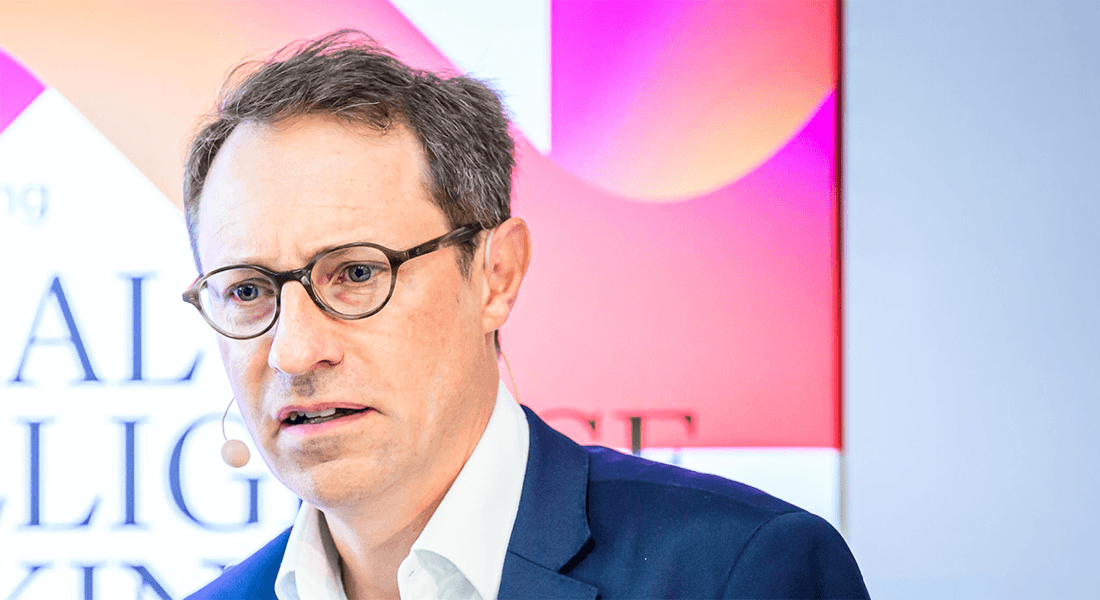
Matthias Fahrenwaldt is Head of Division in the Quantitative Risk Modelling directorate of the Federal Financial Supervisory Authority (BaFin) in Bonn.
Besides supervising internal models at insurance companies, he also co-chairs the Subgroup on Innovative Applications at the European Banking Authority. Holding mathematics degrees from Cambridge University and a history degree from the University of Oxford, Matthias also completed PhDs in theoretical mathematics and history. He is a qualified actuary and held managerial positions at KPMG and McKinsey before working in academia for ten years. His last position prior to joining the regulator was Associate Professor of Actuarial Science at Heriot-Watt University Edinburgh.
Matthias has almost twenty years of experience in the financial sector serving banking and insurance groups as a consultant and academic. For his research contributions he was awarded several national and international prizes, and he is Affiliated Professor of Actuarial Science at the University of Copenhagen.
Evolving extremes: Statistical models for spatial and non-stationary environmental risk assessment
By Thordis Thorarinsdottir
Abstract
Accurate environmental risk assessment for precipitation and flooding requires modelling the behaviour of extreme events that may lie well beyond the range of historical observations. In a changing climate, this task is further complicated by non-stationarity in the underlying physical processes and complex dependencies across space and time.
This talk presents statistical modelling frameworks designed to quantify these unobserved extremes, specifically addressing the dual challenges of spatial dependence—assessing concurrent risk simultaneously across multiple sites—and temporal scaling, where hazards must be modelled over varying durations.
We discuss methodological and computational trade-offs informing current state-of-the-art models and applications to real-world hydro-meteorological data, as well as open questions where new methodologies are needed.
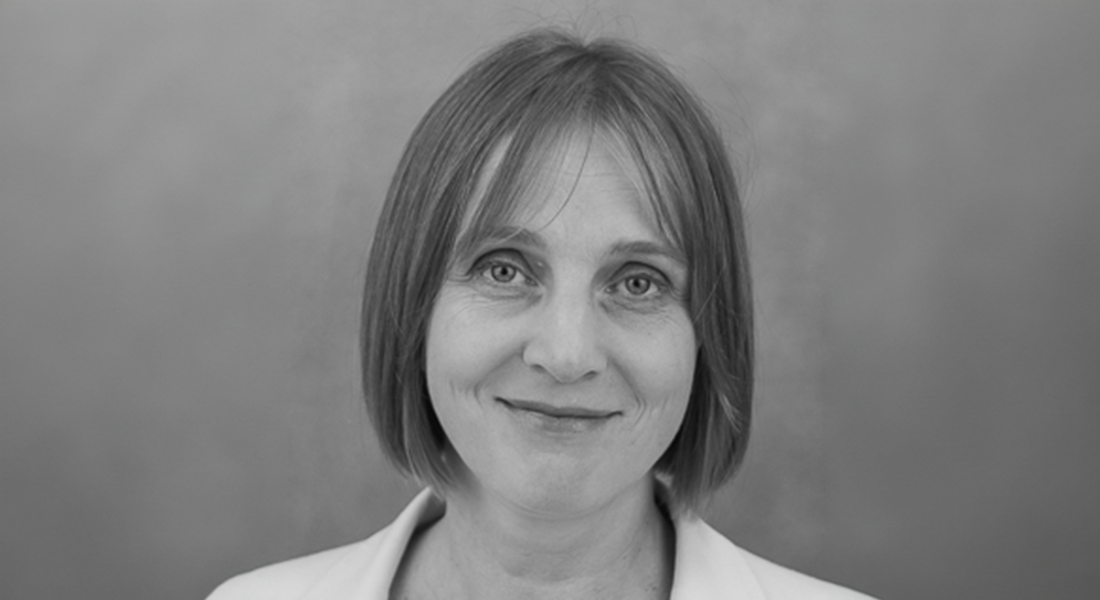
Her research develops stochastic, statistical, and machine learning models for the environmental sciences, with a core focus on uncertainty quantification, probabilistic prediction, and proper scoring rules. She is a Joint Editor of the Journal of the Royal Statistical Society: Series C (Applied Statistics).
If Thiele's equation is the answer, what was the question?
By Marcus Christiansen
Abstract
In the classical Markov life insurance model, Thiele’s equation calculates the expected remaining liabilities of individual life insurance policies. In insurance practice, it is sometimes observed that actuaries still use Thiele’s equation even when the Markov property does not hold.
For example, this can be seen in German pension insurance, where the disability status of individuals prior to retirement is statistically relevant yet disregarded when calculating reserves for old-age pensioners. Without the Markov property, it is unclear what Thiele’s equation is actually calculating. We solve this puzzle by providing an alternative definition of 'prospective reserves'.
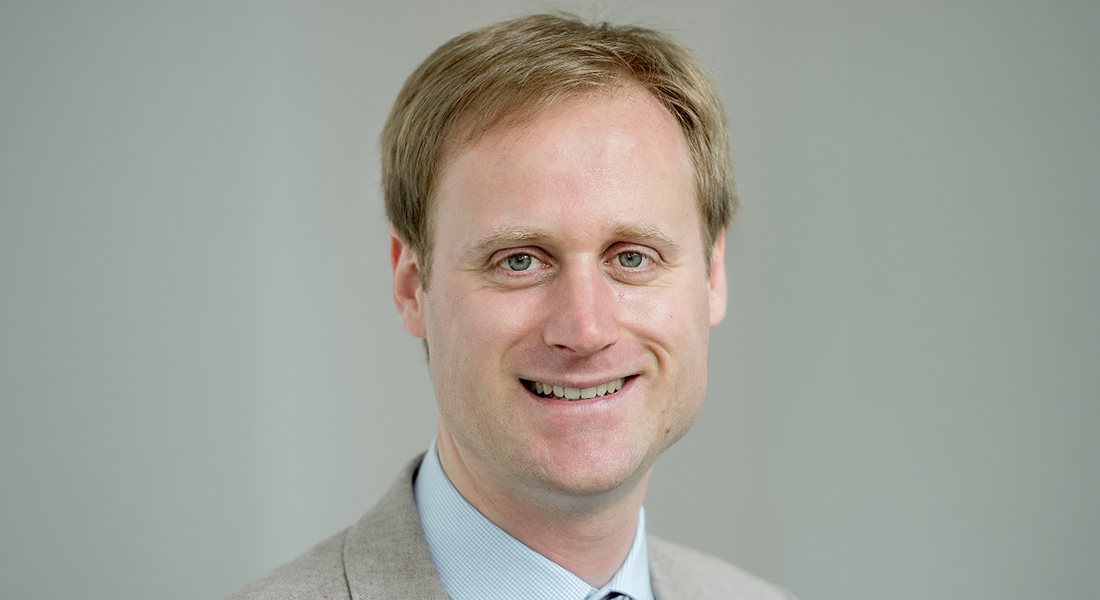
Marcus Christiansen is Professor of Applied Probability Theory at the Institute of Mathematics at the Carl von Ossietzky University in Oldenburg, Germany. Previously, he worked at Heriot-Watt University in Edinburgh, the University of Ulm and the Karlsruhe Institute of Technology and had extended research stays at the Université Catholique de Louvain and the University of Copenhagen.
His primary research interest lies in the field of stochastic processes in insurance, particularly life insurance. He is an editor for the Annals of Actuarial Science and vice-chairman of the German Society for Actuarial and Financial Mathematics (DGVFM).
Robust portfolio choice under preference uncertainty: A best-of-many approach
By Anne Balter
Abstract
We study optimal portfolio choice under uncertainty about an investor’s risk preferences. The investor has constant relative risk aversion (CRRA) preferences, but her risk-aversion parameter is only known to lie within a given interval. To select a single investment strategy under this preference uncertainty, we consider three robustness criteria: absolute welfare, additive regret, and multiplicative regret.
We then introduce a best-of-many approach that seeks an investment strategy performing well across all three criteria, thereby mitigating the risk of overfitting to a particular criterion. We derive the optimal strategy analytically in the classical Merton setting and show that it retains the Merton form, with an effective risk-aversion parameter determined by the best-of-many criterion.
The solution balances certainty-equivalent growth for the most risk-averse type against regret for the least risk-averse type, with either additive or fractional regret determining the binding trade-off. Finally, we use our analytical solutions as simple rules of thumb for preference aggregation in scenario-based portfolio choice. Numerical results show that these rules perform well even when returns deviate from the standard Black–Scholes model.

She is an active researcher in the fields of mathematical finance and insurance, with a particular focus on model uncertainty, robust investments, pensions and real options. She has provided useful insight in explaining and quantifying model ambiguity and its impact on financial investment.
As Senior Fellow of Netspar - the Network for Studies on Pensions, Aging and Retirement - she contributes actively to the Dutch pension debate.
Date: 30 October 2026
Time: 09:00–16:30 · Public keynote programme from 11:00
Place: Auditorium 1, H.C. Ørsted Institute (HCØ), Department of Mathematical Sciences, University of Copenhagen, Universitetsparken 5, 2100 Copenhagen Ø, Denmark
How to find us
Get directions in Google Maps
Registration
Participation is free of charge, but registration is required for all attendees.
Please register via the following link: Registration
Contact
Munir Eberhardt Hiabu
Associate Professor
mh@math.ku.dk